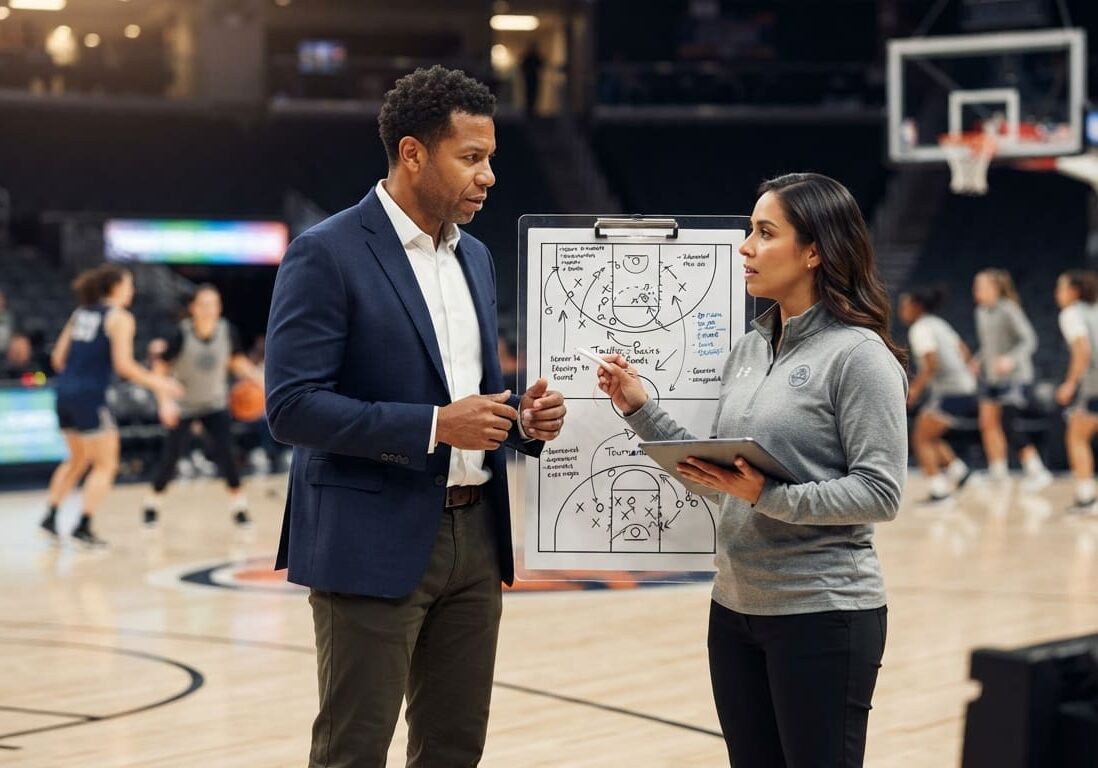
Basketball Tournament Rules and Formats Explained
Understanding Basketball Tournament Rules and Formats
A basketball tournament’s success relies heavily on its structural blueprint. Whether you are organizing a local community league, coaching an elite travel team, or competing in premier youth basketball events hosted by Big Time Hoops, understanding the intricate rules and bracket formats is essential for strategic preparation. Basketball tournament rules dictate everything from game clock management and roster eligibility to tie-breaker scenarios and overtime procedures. Meanwhile, the tournament format determines how teams progress through the bracket, directly impacting player rotation, physical recovery, and overall game strategy.
To navigate these competitive landscapes successfully, coaches, players, and directors must understand the operational differences between governing bodies like the National Federation of State High School Associations (NFHS), the National Collegiate Athletic Association (NCAA), and the International Basketball Federation (FIBA). This comprehensive guide breaks down every major basketball tournament format, analyzes critical rules, and provides actionable insights for tournament directors and participating teams alike.
—
The Core Basketball Tournament Formats Explained
The choice of tournament format shapes the entire competitive experience. It influences the number of guaranteed games, the physical toll on athletes, and the logistical requirements of the venue. Below are the primary tournament structures utilized in modern basketball competitions.
1. Single-Elimination Format (The Knockout Bracket)
The single-elimination bracket is the most high-stakes format in sports, popularized globally by the NCAA’s March Madness. In this structure, one loss results in immediate elimination from the championship pathway.
- How It Works: Teams are seeded based on prior performance, league records, or a selection committee’s ranking. The highest seed plays the lowest seed (e.g., #1 vs. #16) in the first round.
- The Math: To run a perfect single-elimination bracket without “byes,” the number of teams must be a power of two (4, 8, 16, 32, 64). If the team count is uneven, top-seeded teams receive a first-round bye.
- Best For: Large-scale tournaments with limited court space or tight timelines where drama and high stakes are prioritized.
2. Double-Elimination Format (The Second-Chance Structure)
Unlike single-elimination, a double-elimination tournament ensures that a team is not eliminated until they lose two games. This format features a Winners’ Bracket and a Losers’ Bracket (or Consolation Bracket).
- How It Works: All teams start in the Winners’ Bracket. Once a team loses, they drop down to the Losers’ Bracket. The winner of the Losers’ Bracket eventually plays the undefeated winner of the Winners’ Bracket in the championship game.
- The Championship Nuance: Because it is double-elimination, if the undefeated team loses the first championship game, a second “if-necessary” game must be played immediately after to determine the true champion.
- Best For: Competitive travel tournaments where teams travel long distances and demand a guarantee of at least two games.
3. Round-Robin Format (The Ultimate Test of Consistency)
In a round-robin tournament, bracket luck is eliminated because every participating team plays every other team in their group or league exactly once (or twice in a double round-robin).
- How It Works: Points are awarded for wins and losses (e.g., 2 points for a win, 1 point for a loss). The team with the highest point accumulation at the end of all matches is declared the champion.
- Best For: Small leagues, preparatory showcases, or early-stage qualifiers with 4 to 6 teams per division. It provides maximum game guarantees and ensures the most consistent team wins.
4. Pool Play to Bracket Play (The Hybrid Model)
This is the gold standard for major youth and amateur tournaments, combining the balance of round-robin play with the high stakes of single-elimination.
- Phase 1 (Pool Play): Teams are divided into small groups (pools) of 3 or 4. They play a round-robin within their pool to establish seeding.
- Phase 2 (Bracket Play): Based on pool standings, teams are seeded into a single or double-elimination championship bracket (e.g., the top two teams from each pool advance to the “Gold Bracket,” while lower-ranked teams drop to the “Silver Bracket”).
- Best For: Large-scale weekend tournaments, offering a guaranteed 3-game minimum while maintaining an exciting championship bracket conclusion.
—
Critical Basketball Tournament Rules and Regulatory Differences
Rules can vary significantly depending on the governing body sanctioning the event. A rule misunderstanding can lead to technical fouls, game forfeits, or strategic blunders. The table below outlines the primary differences across major basketball regulatory frameworks.
| Rule Category | NFHS (High School) | NCAA (College) | FIBA (International) | Typical Youth / AAU Standard |
|---|---|---|---|---|
| Game Duration | Four 8-minute quarters | Two 20-minute halves | Four 10-minute quarters | Two 14 or 16-minute halves (Stop-clock) |
| Shot Clock | 35 seconds (State option) | 30 seconds | 24 seconds (14-sec reset on offensive rebound) | Often none, or 30/35 seconds for elite divisions |
| Personal Foul Limit | 5 fouls | 5 fouls | 5 fouls (includes technicals) | 5 fouls (sometimes 6 in select formats) |
| Bonus Free Throws | 1-and-1 on 7th foul; double bonus on 10th foul per half | 1-and-1 on 7th foul; double bonus on 10th foul per half | 2 free throws on the 5th team foul per quarter | Often mirrors NFHS, or modified for running-clock ease |
| Timeout Allocation | Three 60-sec, two 30-sec timeouts | Four timeouts (varies by media coverage) | 2 in first half, 3 in second half (no carryover) | Two 60-second timeouts per half (no carryover) |
—
Decoding Tie-Breaker Mechanics in Pool Play
In hybrid tournaments, multiple teams within a pool often finish with identical win-loss records. Tournament directors must use standardized, objective tie-breaker rules to determine which teams advance to the championship bracket. Understanding these rules is vital for coaches who may need to manage point differentials late in a game.
- Head-to-Head Record: The simplest tie-breaker. If Team A and Team B both finish pool play at 2-1, but Team A defeated Team B in their direct matchup, Team A earns the higher seed.
- Point Differential (Margin of Victory): If three teams are tied at 2-1, head-to-head records form a circular loop (Team A beat Team B, Team B beat Team C, Team C beat Team A). In this scenario, point differential is applied. This is calculated as points scored minus points allowed.
- Note: To prevent unsportsmanlike behavior and running up scores, most tournaments place a cap on point differentials per game (typically a maximum of +15 or +20 points).
- Points Allowed (Defensive Focus): If teams remain tied after point differential, the team that allowed the fewest total points throughout pool play wins the tie-breaker. This rewards defensive efficiency.
- Points Scored (Offensive Focus): The team that scored the highest total number of points during pool play.
- Coin Flip / Random Draw: The final resort if all statistical categories are completely identical.
—
Overtime Procedures: How Tournaments Resolve Draws
In bracket play, there must be a winner. Different tournaments handle overtime (OT) periods in various ways to balance player safety, scheduling demands, and competitive integrity.
- Standard Timed Overtime: Most high school, collegiate, and elite youth tournaments run a timed overtime period. Under NFHS rules, this is typically 4 minutes. In youth tournaments, it is commonly 2 or 3 minutes with a stop-clock.
- Sudden Death / Elam Ending: To keep tournament schedules running on time, some youth structures implement a sudden-death format for overtime. The first team to score a specified number of points (e.g., 2 points or 4 points) or simply the first team to score any basket wins.
- Timeout Carryover: Typically, teams are granted one additional timeout for the overtime period, and unused timeouts from the second half may or may not carry over depending on local tournament rules.
—
Real-Time Google Search Queries & Intent Mapping
To help coaches, parents, and players find accurate information quickly, we have mapped out the most common real-time queries searched by the basketball community regarding tournament rules and formats:
- Query: “How many fouls to foul out in high school basketball?”
Answer: Under NFHS rules, a player fouls out upon committing their 5th personal foul, which includes both personal and technical fouls. - Query: “What is pool play in a basketball tournament?”
Answer: Pool play is a preliminary round where teams are divided into groups to play round-robin matches. The results determine seeding for the subsequent single-elimination bracket. - Query: “How does point differential work in basketball tie-breakers?”
Answer: It is the difference between points scored and points allowed. Most tournaments cap this at +15 or +20 points per game to discourage teams from running up the score against weaker opponents. - Query: “Do technical fouls count as personal fouls?”
Answer: Yes, under NFHS, NCAA, and FIBA rules, a technical foul charged to a player counts as one of their personal fouls and toward the team foul total.
—
Expert Best Practices for Tournament Directors
Organizing a basketball tournament requires meticulous planning. If you are a tournament director, keeping these logistical best practices in mind will ensure a smooth, professional event:
- Publish Rules Early: Ensure all coaches have digital access to the tournament rules packet at least one week prior to the event. This packet should clearly outline game lengths, warmup times, tie-breaker rules, and protest procedures.
- Standardize Game Balls: Provide high-quality game balls for all courts to ensure consistency. Ensure the correct sizes are used: Size 6 (28.5″) for girls’ divisions and boys’ youth divisions (typically up to 6th grade), and Size 7 (29.5″) for boys’ high school and adult divisions.
- Secure Certified Officials: The quality of officiating directly impacts the reputation of your tournament. Employing certified high school or collegiate officials minimizes disputes and ensures player safety.
- Build in Buffer Time: When scheduling games, always build in a 10 to 15-minute buffer between scheduled start times. Games that go into overtime or feature heavy fouling can quickly derail a tight venue schedule.
—
Frequently Asked Questions (FAQs)
Can a basketball game end in a tie in tournament play?
No. While regular-season league games in very young age groups might occasionally allow ties, tournament play requires a winner to advance bracket progression. Overtime periods are played until a winner is decided.
What is a “bye” in a tournament bracket?
A bye occurs when a team is automatically advanced to the next round of a bracket without having to play an opponent. Byes are typically awarded to top-seeded teams in single-elimination brackets when the total number of teams is not a perfect power of two.
How do technical fouls affect team bonus situations?
Under most rules, team fouls accumulate throughout each half (or quarter, under FIBA rules). Player technical fouls count toward the team foul total, pushing the opposing team closer to the bonus (free throw) situation.
Are roster rules strict in amateur tournaments?
Yes. Elite tournaments require proof of age or grade eligibility (such as report cards or birth certificates) during team check-in to prevent older players from competing in younger divisions. Players are generally not allowed to play on multiple teams within the same division.