How to Prepare Your Team for the Texas Elite Super 64 Tournament
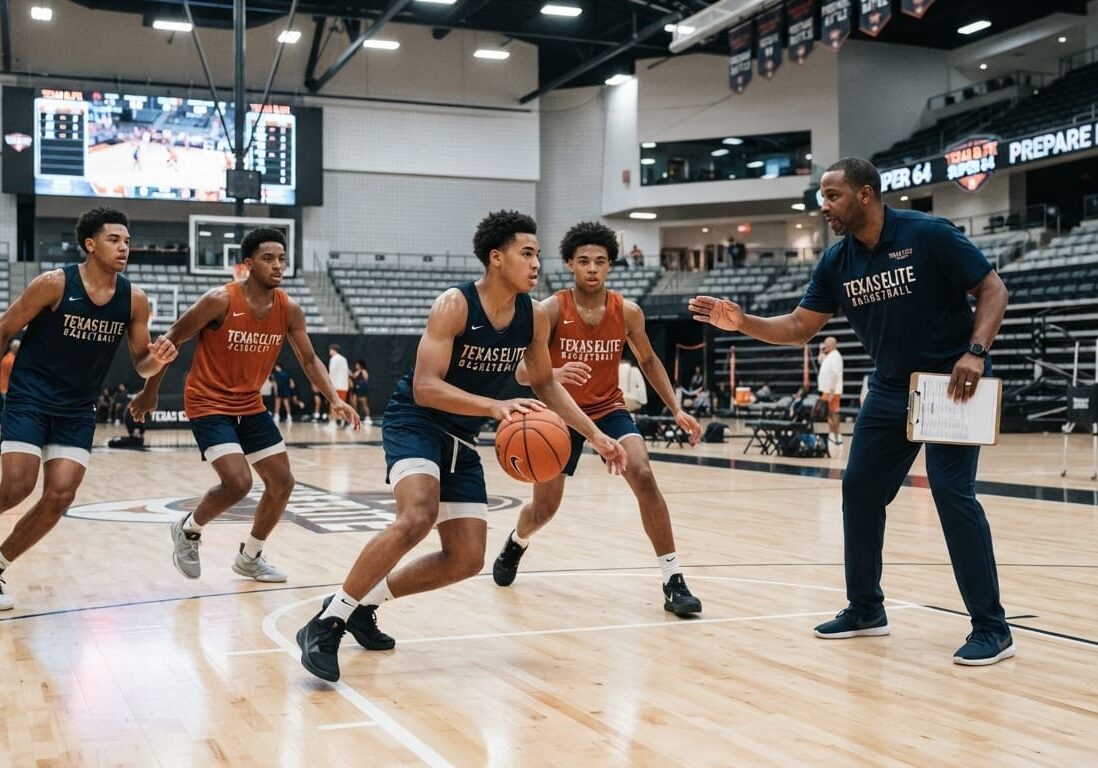
Preparing a youth basketball team for the prestigious Texas Elite Super 64 Tournament requires a meticulous blend of elite physical conditioning, tactical adaptability, administrative precision, and exposure marketing. To succeed in this high-stakes NCAA-certified showcase, coaching staff must implement an 8-week structured preparation cycle focusing on high-tempo transition drills, press-break execution, and comprehensive roster optimization. By aligning your training regimen with the physical demands of showcase basketball and ensuring all players are registered in the NCAA Basketball Certification System (BBCS), your program can maximize both court success and collegiate recruiting opportunities.
The Texas youth basketball circuit is legendary for its speed, athleticism, and depth. The Texas Elite Super 64 stands as a crown jewel of this competitive landscape, drawing hundreds of college scouts, scouting services, and premier club teams from across the nation. To stand out, your team cannot simply show up; you must arrive with a systematic game plan designed to handle the unique pressures of showcase-style tournament play.
Understanding the Landscape of the Texas Elite Super 64
Before stepping onto the hardwood, coaches must understand the distinct environment of the Texas Elite Super 64. Unlike standard local league play or regional bracket tournaments, this event is designed as an exposure platform. Every game is scrutinized by division scouts, recruiting analysts, and regional evaluators looking for specific athletic profiles, high basketball IQ, and cohesive team play.
The style of play in Texas is notoriously fast-paced and physical. Teams prioritize transition offense, aggressive full-court trapping defenses, and isolation scoring. To counter this, your preparation must emphasize ball security, defensive transition communication, and half-court execution under extreme physical duress. Furthermore, because the tournament runs multiple games a day over a grueling weekend, depth and physical stamina will dictate your survival in the championship brackets.
When planning your competitive season, partnering with premier tournament organizers like Big Time Hoops ensures your team gets the high-level exposure and rigorous competition needed to sharpen their skills before hitting the Super 64 stage. Navigating these high-profile environments requires a strategic roadmap that begins weeks before the first tip-off.
The 8-Week Master Preparation Timeline
Success at a major exposure tournament is rarely decided during the tournament weekend; it is forged during the weeks of deliberate preparation leading up to it. Below is a comprehensive 8-week preparation timeline designed to peak your team’s physical and tactical performance exactly when the tournament begins.
| Timeline Phase | Primary Focus Area | Key Tactical Objectives | Administrative & Logistics Tasks |
|---|---|---|---|
| Weeks 1-2: Base & Compliance | Aerobic Conditioning & NCAA Registration | Full-court press defense fundamentals, transition lane filling, individual defensive positioning. | Submit roster to NCAA BBCS; verify athlete USA Basketball Gold Licenses; secure hotel blocks. |
| Weeks 3-4: Tactical Integration | Set Plays & Press Breaks | Implement primary and secondary break options; establish 2-2-1 and 1-2-1-1 press-break patterns. | Order custom recruiting packets; compile player profiles and academic transcripts. |
| Weeks 5-6: Game Simulation | High-Intensity Scrimmages | Simulate back-to-back game scenarios; practice special situations (late-game, baseline out of bounds). | Confirm tournament schedule; distribute travel itinerary to parents and players. |
| Weeks 7-8: Tapering & Scouting | Fine-Tuning & Active Recovery | Reduce practice volume while maintaining intensity; focus on shooting consistency and free throws. | Print physical coaches’ packets; prep digital film sharing systems; finalize hydration protocols. |
Phase 1 (Weeks 1-2): Building the Physical and Administrative Foundation
The initial phase of your preparation must address two critical pillars: physical conditioning and administrative compliance. The Texas Elite Super 64 requires players to perform at peak output across multiple games in a 48-hour window. Your practices must reflect this reality. Incorporate high-intensity interval training (HIIT) directly into your basketball drills to build sport-specific endurance.
On the administrative side, do not underestimate the complexity of NCAA certification. Every coach sitting on the bench must possess an active USA Basketball Gold License, and all players must be verified through the NCAA BBCS. Failing to complete these steps early can lead to immediate disqualification, rendering your preparation useless.
Phase 2 (Weeks 3-4): Developing Tactical Adaptability
During these weeks, shift focus toward installing your half-court offensive sets and press-break systems. Texas teams will attempt to disrupt your rhythm with aggressive, trapping defenses. Your players must be equipped with multiple press-break options that do not rely solely on individual dribbling. Emphasize passing over the top, utilizing the middle of the floor, and maintaining proper spacing to neutralize defensive traps.
Phase 3 (Weeks 5-6): Simulating the Tournament Environment
Transition your practices into highly competitive simulation sessions. Run 5-on-5 scrimmages where referees are instructed to call tight fouls, simulating the officiating styles of national tournaments. Force your team to play through fatigue by running scrimmages at the end of two-hour practice sessions. This is also the time to practice special situations: down by three with ten seconds left, executing a sideline out-of-bounds play, or managing a shot-clock scenario.
Phase 4 (Weeks 7-8): Tapering for Peak Performance
In the final fortnight, reduce the overall volume of your practices to prevent physical burnout, but keep the mental intensity high. Focus heavily on shooting drills, free-throw consistency under fatigue, and walk-throughs of your defensive rotations. Ensure your players are getting adequate sleep, stretching daily, and maximizing their nutritional intake to build glycogen stores for the upcoming weekend.
Tactical Blueprint: Adjusting Your Playbook for Showcase Basketball
Showcase tournaments present a unique tactical challenge. College coaches are not just looking for winning teams; they are looking for individual players who can fit into collegiate systems. Therefore, your playbook must balance cohesive team concepts with opportunities for individual talent to shine.
1. Designing an Unstoppable Transition Offense
In showcase events, the team that controls the glass and controls the tempo controls the game. Your transition offense should be structured yet flexible. Emphasize the “rim run” where your center sprints directly to the front of the rim, forcing the defense to collapse and opening up trailing three-point opportunities for your shooters.
- The Outlet Pass: Train your rebounders to turn and fire the outlet pass within one second of securing the ball.
- Lane Filling: Wings must sprint wide to the corners, stretching the opposing transition defense to its breaking point.
- The Drag Screen: Utilize early ball screens in transition before the opposing defense can establish their half-court shell.
2. Installing a Multi-Tiered Press Break
To survive the defensive pressure of elite Texas teams, your press break must be dynamic. Instead of relying on a single static press-break formation, implement a system that adjusts based on where the defense sets up. Teach your players to recognize whether the opponent is running a 1-2-1-1 diamond press, a 2-2-1 soft press, or a run-and-jump man-to-man press.
The golden rule of breaking any press is simple: the ball moves faster than the man. Encourage quick swing passes, utilize the center of the court as a release valve, and instruct your ball handlers to keep their eyes up to spot open teammates cutting toward the basket.
3. Half-Court Execution Under Physical Duress
When the transition game gets shut down, your team must be able to execute in the half-court. Against physical, hand-checking defenses, screening angles become paramount. Emphasize hard, legal screens and teach your cutters how to set up their defenders using change of pace and direction. Implement quick-hitting plays that create isolation opportunities for your primary scorers while maintaining floor balance to prevent transition opportunities for the opponent.
The Exposure Strategy: Getting Your Players Noticed
While winning games is highly desirable, the primary objective for many programs attending the Texas Elite Super 64 is securing collegiate opportunities for their athletes. A coach’s job extends beyond the clipboard; you must act as a marketing director for your roster.
Creating an Elite Recruiting Packet
Do not expect college coaches to hunt for your players’ details. Prepare a professional, digital and physical recruiting packet to distribute to coaches and scouts sitting baseline. This packet should be concise, professional, and easily digestible.
- Player Profiles: Include headshots, jersey numbers, heights, weights, and high school affiliations.
- Academic Metrics: Clearly list GPA, SAT/ACT scores (if available), and NCAA Eligibility Center IDs. This is often the first thing college coaches look at.
- Contact Information: Provide direct contact info for the head coach, club director, and the parents of the athletes.
- QR Codes: Embed QR codes on your physical packets that link directly to player highlight tapes, full-game film, and online profiles.
Managing the Showcase Bench Rotation
Coaching in an exposure event requires a different mentality than coaching in a local league championship. While you want to win, you must also ensure that your college-prospect players get adequate, meaningful floor time when scouts are watching. Avoid playing a short 6-man rotation that leaves talented prospects on the bench during critical evaluation windows. Conversely, ensure your players understand that playing selfishly to “get their own stats” is a major red flag for college coaches. Scouts value high-IQ plays, defensive communication, boxing out, and being a supportive teammate on the bench just as much as scoring output.
Logistical Blueprint: Managing the Texas Environment
The physical environment of Texas tournaments presents its own set of challenges. Traveling to a major hub like Dallas, Houston, or Austin requires careful planning to ensure your players are rested, hydrated, and focused.
Beat the Texas Heat: Hydration and Nutrition Protocols
Playing multiple games in air-conditioned convention centers can mask how dehydrated players actually are. The dry, high-output environment demands a strict hydration schedule that starts 48 hours before the first game.
Instruct your players to consume half their body weight in ounces of water daily, supplemented by electrolyte-rich drinks. Avoid sugary sodas and heavy, greasy meals between games. Opt instead for easily digestible carbohydrates and lean proteins, such as bananas, turkey wraps, oatmeal, and energy bars, to keep energy levels stable without causing stomach cramps.
Travel and Rest Optimization
Travel fatigue can ruin weeks of hard work. If your team is traveling from out of state or driving several hours across Texas, arrive at least 24 hours before your first scheduled game. This allows players to shake off travel stiffness, get a light shootaround in, and adjust to the local environment. Establish strict curfew guidelines and limit phone and screen time before bed to ensure high-quality REM sleep, which is critical for muscle recovery and mental alertness.
Game-Day Management: Navigating the Tournament Grind
Once the tournament begins, the coach’s role shifts from tactical instructor to energy manager. How you handle the spaces between games will directly influence your performance on the court.
Active Recovery Between Games
The period immediately following a game is crucial. Do not let your players sit idle. Implement a mandatory 10-minute active recovery protocol after every game:
- Light Dynamic Stretching: Focus on flushing lactic acid from the legs.
- Myofascial Release: Encourage the use of foam rollers or massage guns on tight muscle groups.
- Immediate Nutrition: Consume a high-protein, moderate-carbohydrate snack within 30 minutes of the final buzzer to kickstart muscle repair.
- Ice Baths or Cold Showers: If your hotel has facilities, utilize cold water therapy to reduce systemic inflammation.
Mental Resilience and Handling Adversity
Tournament play is a roller coaster. You will face tough losses, questionable officiating, and physical fatigue. Keep your team mentally grounded. Establish a “next play” philosophy where mistakes are quickly forgotten and the focus remains entirely on the present moment. Lead by example on the sideline; your body language and demeanor will be mirrored by your players. If you remain calm, composed, and strategically focused, your team will play with the same poise.
Frequently Asked Questions Regarding Tournament Preparation
What are the roster and age verification requirements for the Texas Elite Super 64?
The Texas Elite Super 64 strictly adheres to NCAA and national youth basketball guidelines. All rosters must be submitted through the designated tournament portal prior to the deadline. Players must provide valid birth certificates, state IDs, or report cards to verify age and grade eligibility. Furthermore, for high school divisions, all participants must be registered through the NCAA BBCS system to ensure compliance with collegiate scouting regulations.
How do college coaches evaluate players at these showcase events?
While scoring is eye-catching, college coaches evaluate players based on translatable collegiate skills. They look for defensive lateral quickness, communication, court vision, motor/effort levels, how players handle adversity, and physical projection. A player who hustles back on defense, sets hard screens, and communicates effectively often stands out more than an inefficient high-volume scorer.
What should be included in our team’s travel first-aid kit?
Your athletic trainer or coaching staff should carry a fully stocked medical kit designed for high-impact sports. This must include instant cold packs, athletic tape (for ankles and wrists), pre-wrap, blister pads, band-aids, elastic bandages, muscle rub, electrolyte replacement packets, and basic pain relievers (as permitted by parental consent forms).
How can we film games effectively for highlight reels and scouting?
Elevate your camera setup to capture the entire court, preferably from a mid-court, elevated vantage point. Ensure your videographer captures the scoreboard periodically so editors can contextualize the game situation. Avoid excessive zooming; scouts want to see off-ball movement, defensive rotations, and floor spacing, not just close-ups of the ball handler. Use high-quality tripod mounts to ensure stable, professional footage suitable for college submission.