
Age vs Grade
The Great Divide: Age vs. Grade
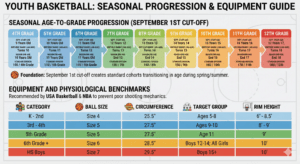
In the world of youth basketball, the “Age vs. Grade” debate usually boils down to whether we should group kids by their biological maturity or their social peers.
Age-Based Events (e.g., 12U, 14U)
-
The Pro: It levels the physical playing field. It prevents a 15-year-old who was held back a grade from bullying 13-year-olds on the court.
-
The Con: It can split up school teammates. If half a 7th-grade team is “age-legal” for 12U but the other half has summer birthdays that push them to 13U, the team chemistry is nuked.
Grade-Based Events (e.g., 7th Grade Division)
-
The Pro: It mirrors the school environment. These kids play together in middle school, and they want to stay together on the travel circuit. It builds long-term chemistry for high school ball.
-
The Con: It invites “reclassing.” Parents often hold children back a grade (academic redshirting) specifically so they can be the oldest, biggest, and strongest in their grade division.
Is There an Unfair Advantage?
The verdict is in: The advantage is real and well-documented. The “Age vs. Grade” debate isn’t just about what’s on a birth certificate; it’s about physiological equity. > * The Maturity Gap: A 14-year-old playing in a 7th-grade (12U/13U) division has a massive hormonal advantage.
This is known as the Relative Age Effect (RAE). Research shows that within a single age group, athletes born in the first three months of the “cutoff school date” are more likely to be identified as “elite”. This is simply because they are nearly a year more physically developed than their peers born late in the cycle.
-
The “Man-Child” Factor: In a grade-based system, a “reclassed” player might be 18 months older than their opponent. In youth sports, 18 months is the difference between a child and a young adult in terms of bone density, muscle mass, and coordination.
-
The Psychological Edge: The older child gets more playing time and better coaching because they “look the part,” creating a compounding advantage that the younger, “late-bloomers” can rarely overcome.
Final Take for BigTimeHoops.net
At the end of the day, youth sports is a developmental tool. Whether we use age or grade, the goal should be to provide a competitive struggle. If a player is so much older or physically different that they never struggle, they aren’t actually getting better.
Big Time Hoops participants deserve a system that prioritizes transparency. Whether we land on strict age cutoffs or verified grade checks, the win is in the integrity of the game.
What’s your take? Are you seeing more reclassed players in your local circuits or events?